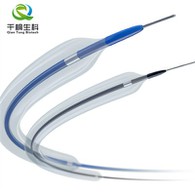

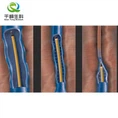


How to use this balloon catheter:
1. Preparation: The patient is prepped for the procedure, which may involve a local anesthetic and/or sedation. Medical staff will ensure that the patient is comfortable throughout the procedure.
2. Insertion: The catheter is inserted into the blood vessel through a small incision in the skin. It is guided to the site of the narrowing or blockage using X-ray imaging or ultrasound.
3. Inflation: Once the catheter is in place, the balloon is inflated inside the vessel. This helps to open up the narrowed or blocked area and improve blood flow.
4. Medication delivery: The DEB will release the medication onto the vessel walls for a controlled period of time. The medication will help to prevent re-narrowing of the vessel and promote healing.
5. Removal: After the medication has been released, the balloon is deflated and removed from the vessel. A small bandage or dressing is applied to the incision site.
6. Recovery: The patient may be monitored for a short period of time in a recovery room. If all goes well, they will be able to go home the same day.
It is important to note that the specific instructions for using a DEB may vary depending on the individual case and the medical facility where the procedure is being performed. Only a qualified medical professional is qualified to perform this type of procedure.
DEB are used in the treatment of coronary artery disease (CAD) and peripheral arterial disease (PAD). They are similar to traditional balloon catheters used to clear blocked arteries, but they are coated with medication that is slowly released into the vessel walls, helping to prevent restenosis (re-narrowing) of the artery.
The following are some benefits of DEB catheters:
1. Effective treatment: Studies have shown that drug-eluting balloon catheters are more effective in reducing restenosis of arteries than traditional balloon catheters.
2. Low risk of complications: Drug-eluting balloon catheters have a low risk of complications compared to other treatments like stenting.
3. Reduced need for additional procedures: Because drug-eluting balloon catheters can reduce the chance of restenosis, there is a reduced need for additional procedures like balloon angioplasty or stenting.
4. Cost-effective: DEB catheters are more cost-effective than other treatments in the long-term because they reduce the need for additional procedures, hospitalizations, and medications.
It is important to keep in mind that DEB balloon catheters are not suitable for all patients, and individual cases need to be evaluated by a healthcare professional.


Hot Tags: drug eluting balloon catheter, China drug eluting balloon catheter manufacturers, suppliers, factory, Pta Balloon, Drug Eluting Balloon Catheter, Ptca Balloon Dilatation Catheter, Aortic Occlusion Balloon Catheter, Cervical Balloon, Pta Catheter