


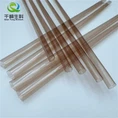


Catheter Balloon
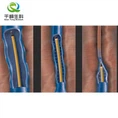
A catheter balloon is a medical device composed of a soft, flexible tube with an inflatable balloon at one end. It is used to widen or open narrowed or blocked blood vessels, such as the coronary arteries, in a medical procedure known as balloon angioplasty. Once the balloon catheter is placed at the site where the artery is narrowed or blocked, the balloon is inflated, compressing the plaque and widening the channel for blood flow. The catheter balloon is then deflated and withdrawn, leaving the blood vessel open and clear.
Why Choose us?
Expertise
Our team has expertise in the latest CAD/PAD technologies and a wealth of experience in the industry. We stay up-to-date with the latest advancements in the field, so you can rest assured that you are receiving the highest quality services.
Quality Control
We have a strict quality control process to ensure that the products we produce and the services we provide meet or exceed industry standards. You can trust us to deliver consistent, reliable, and accurate results every time.
Competitive Pricing
We offer competitive pricing without compromising on quality. We understand the importance of keeping costs low, and we work hard to find solutions that fit within your budget.
Customer Service
We strive to provide excellent customer service and support throughout every stage of the project. Our team is always available to answer questions, provide guidance, and offer assistance whenever you need it.


Benefits of Catheter Balloon
Catheter balloon procedures offer several benefits for patients, including:
Minimally invasive
Catheter balloon procedures are generally minimally invasive, which means that they cause less trauma to the body than traditional surgery. This leads to a faster recovery time and less discomfort for the patient.
01
Increased safety
Catheter balloon procedures are generally safer than traditional surgery because they do not require a large incision. This means that there is less risk of complications such as infection, bleeding, and damage to nearby organs.
02
Improved accuracy
Catheter balloon procedures are generally more accurate than traditional surgery because they allow the surgeon to see the target area in real-time. This means that the surgeon can make more precise incisions and avoid damaging surrounding tissue.
03
Reduced recovery time
Because catheter balloon procedures are minimally invasive, patients often experience a faster recovery time. They may be able to return to their normal activities sooner than they would with traditional surgery.
04
Reduced scarring
Because catheter balloon procedures do not require a large incision, there is often less scarring than with traditional surgery. This can lead to improved cosmetic results.
05

AEmptying the bowel using a Catheter Balloon allows more control over when and where a bowel movement will occur. It benefits people who have spina bifida, spinal cord injuries and other conditions that may interfere with the ability to have regular bowel movements.
● This procedure involves inserting a small tube called a catheter through the rectum and into the lower intestine. Once in place, a small balloon at the end of the catheter is inflated to secure it in the rectum.
● Then, warm water is slowly passed through the catheter and into the bowel to stimulate defecation. The waste material is then collected in a bag attached to the catheter.
● Using a Catheter Balloon for bowel management can offer several advantages. It can allow individuals to avoid the discomfort and inconvenience of stool accidents and the need for frequent trips to the bathroom. It can also help reduce the risk of constipation, bowel obstruction, and other complications associated with bowel dysfunction.
● Additionally, it can be an effective way to establish a regular bowel routine and maintain better bowel health.
● However, it is important to note that this procedure requires proper training and supervision to avoid injury or infection. Catheter Balloon is also not suitable for everyone, and a healthcare provider should be consulted to determine if it is the right choice for an individual's specific needs.
Specifications of Catheter Balloon
Catheter balloon is a medical device that is used to treat various medical conditions, including cardiovascular diseases, gynecological problems, and urinary tract disorders. Balloon catheters are usually made of inflated extruded tubes where the tubes are stretched in axial and radial directions in a balloon forming machine. The main properties of balloons are surface smoothness, puncture resistance, and burst strength. These properties are controlled by polymer selection and processing.
The following are the specifications of catheter balloon:
Size: The size of catheter balloons varies depending on the medical condition they are used to treat. The size ranges from 2mm to 40mm.
● For example, a urinary catheter balloon used for urinary retention may have a size of 10-30mm, while a balloon used for angioplasty to open blocked blood vessels may have a size of 2-6mm.
● The size of the balloon is typically chosen by the healthcare provider based on the specific medical condition and the individual needs of the patient.
● The larger balloons are used for more serious medical conditions and require more skilled medical professionals for insertion and removal.
Shape: Catheter balloons come in different shapes, including cylindrical, tapered, and pear-shaped.
● Tapered and pear-shaped balloons may be used in cases where there is a need for gradual dilation of the vessel or organ
● Cylindrical-shaped balloons are used for faster dilation.
● The material of the balloon may also vary, with common materials including latex, silicone, and polyurethane.
Applications of Catheter Balloon
Catheter balloon is indicated for use in Percutaneous Transluminal Angioplasty of the femoral, iliac, and renal arteries and for the treatment of obstructive lesions of native or synthetic arteriovenous dialysis fistulae.
Angioplasty
Catheter balloon is used in angioplasty to widen the narrowed or blocked blood vessels. Balloon catheters are inserted into the blocked arteries, the balloon is inflated, and the blockage is pushed aside to allow the blood to flow freely.
Cardiovascular Surgery
Catheter balloons are used in cardiovascular surgery for a variety of procedures, including heart valve replacement and repair, cardiomyopathy and heart bypass surgery.
Urology
Balloon catheters are used in urology to relieve bladder blockages or to help in incontinence management. The balloon is inflated to hold the catheter in place while it drains urine.
Gastrointestinal Surgeries
Catheter balloons are used in gastrointestinal surgeries to help manage blockages or strictures. The balloon is inflated to hold open the narrowed portion of the intestine.
Oncology
Catheter balloons are used in oncology during brachytherapy, which is a type of radiation therapy. The balloon catheter is inserted in the body cavity, such as the rectum, and inflated. The radiation source is placed inside the balloon catheter, delivering high doses of radiation to the tumor.
Vascular Access
Catheter balloons are used in vascular access procedures, such as central venous catheterization. The balloon catheter is inserted into a vein, then inflated to hold it in place. This allows medication and fluids to be delivered directly into the bloodstream.
Catheter balloons can be made from a range of materials, including silicone, latex, polyurethane, and nylon. The choice of material depends on the intended use of the balloon catheter and the specific properties required, such as flexibility, durability, and biocompatibility.
● Silicone balloons are often used in cardiovascular and neurovascular procedures due to their flexibility and ability to withstand high-pressure inflation.
● Latex balloons are less expensive but can cause allergic reactions in some patients.
● Polyurethane and nylon materials are commonly used in urological catheters for their durability and non-reactivity with bodily fluids.

Precautions for Use Catheter Balloon
Indications
The catheter balloon is indicated for use in percutaneous transluminal angioplasty of the femoral, iliac, and renal arteries and for the treatment of obstructive lesions of native or synthetic arteriovenous dialysis fistulae. The catheter balloon enables the infusion of diagnostic or therapeutic fluids. This catheter is not for use in coronary arteries or cerebral vasculature.
Do not use the catheter balloon
For coronary arteries nor for the delivery and/or expansion of stents.
In patients who cannot tolerate anticoagulation therapy.
Warnings
Single patient use only. Do not re-use, re-process or re-sterilize.
Use the recommended catheter balloon inflation medium. Do not use air or any other gaseous medium to inflate the balloon or for infusion through the catheter.
When the catheter is exposed to the vascular system, it should be manipulated only while under high-quality fluoroscopic observation.
Do not manipulate the catheter unless the catheter balloon is fully deflated. Never advance / withdraw against any resistance. Do not use excessive force. If resistance is felt, determine the cause and take any necessary remedial action. Applying excessive force to the catheter may lead to tissue trauma and / or device damage.
Do not exceed the rbp recommended on the product label. catheter balloon rupture may occur if the rbp rating is exceeded. To prevent over pressurization, use an inflation device with manometer.
When Choosing Catheter Balloon, You Should Consider:
Catheter balloon size
The first thing to consider when choosing catheter balloon is the size. The size of the catheter balloon should be appropriate for the size of the patient and the size of the catheter. The size of the catheter balloon should match the size of the catheter's shaft to ensure a good fit. Choosing catheter balloon that is too large or too small can lead to problems during the dilation procedure.
Compliance
The catheter balloon should be made of a material that is compliant with the body tissues, so it does not cause any irritation or discomfort.
Shape
The shape of the catheter balloon will depend on the type of procedure being performed. For example, a tapered balloon may be used for dilating a stenotic area, while a cylindrical shape may be used for dilating a stricture. The shape of the catheter balloon should be uniform, so it inflates evenly and fully.
Pressure
The catheter balloon should be inflated to the appropriate pressure for the procedure and for the patient's comfort. The pressure should be based on factors such as the size of the catheter balloon, the size of the patient, and the purpose of the catheterization. Over-inflation can also lead to discomfort or pain for the patient, while under-inflation can result in the catheter not remaining in place or failing to drain properly. Regular monitoring of the catheter and balloon pressure is necessary to ensure proper function and patient comfort.
Material
The material of the catheter balloon should be appropriate for the procedure and the patient's needs. For example, silicone is often used for long-term catheterization, while latex is used in short-term procedures. The balloon's material is another important consideration. The material should be safe, non-toxic, and durable. Some of the common materials used for catheter balloons include latex, silicone, and polyurethane.
Sterility
The catheter balloon should be sterile to prevent infection and contamination.
Inflation Capacity
The inflation capacity of the catheter balloon is also important to consider. The catheter balloon should have enough capacity to achieve the desired dilation, but not so much that it over-inflates and causes damage to the blood vessels or surrounding tissues. It is essential to choose the right catheter balloon size along with its inflation capacity to avoid any complications and to ensure a successful procedure.
Compatibility
The catheter balloon should be compatible with the catheter and other components of the procedure or device.
Manufacturer
The catheter balloon should be manufactured by a reputable and reliable company that meets regulatory standards and quality controls.
Hangzhou Qiantong Biotechnology Co., Ltd. is located in Hangzhou, Zhejiang Province, China. Since its establishment in 2017, the company has been focusing on the field of vascular intervention and is determined to provide high-quality and affordable intervention consumables for global partners. We can provide not only semi-finished products, but also finished products. The products cover such fields as cardiology, cardiac surgery, vascular surgery, Radiology, Intracranial vascular intervention,Electrophysiology etc.


With more than 10 years Production and sales experience in CAD /PAD, the founder and team from Hangzhou Qian Tong Biotechnology are specialized in providing products and service as follow:


Certifications

FAQ
Q: What is the purpose of a balloon on a catheter?
Q: How effective is the balloon catheter?
Q: How long can a balloon catheter stay in?
Q: What drinks to avoid with a catheter?
Q: What happens after balloon catheter falls out?
Q: Does removing a balloon catheter hurt?
Q: What happens if you pull out a catheter without deflating the balloon?
Q: Can you accidentally pull out a catheter?
Q: How long does it take for bladder to return to normal after catheter removal?
Q: Why does my catheter hurt when I sit down?
Q: What happens if you inflate a catheter balloon in the urethra?
Q: Is it normal to pee every hour after catheter removal?
Q: How can you help yourself pee after a catheter is removed?
Q: What is the best position to sleep in with a catheter?
Q: How can I strengthen my bladder after catheter removal?
Q: How much fluid is in a catheter balloon?
Q: What is the success rate of balloon catheters?
Q: How do you pee with a balloon catheter?
Q: Can you walk around with a balloon catheter in?
Q: How long can a balloon catheter stay in?
We're well-known as one of the leading catheter balloon manufacturers and suppliers in China. Please feel free to wholesale high quality catheter balloon at competitive price from our factory. For custom service, contact us now.
Balloon Dilatation Catheter, Drug Eluting Catheter, Pta Balloon Catheter