




Microcatheter
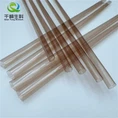
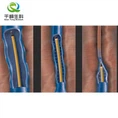
A microcatheter is a very thin catheter, typically less than 1mm in diameter, used in medical procedures. It is smaller than a regular catheter and is used to access small blood vessels, particularly in the brain and heart, for diagnostic or therapeutic purposes. Microcatheters are particularly useful in interventional radiology procedures, where doctors use X-ray imaging to guide the microcatheter to the target site for treatment. They may also be used in neurovascular surgeries or to deliver drugs directly to a tumor or other lesion.
Why Choose us?
Expertise
Our team has expertise in the latest CAD/PAD technologies and a wealth of experience in the industry. We stay up-to-date with the latest advancements in the field, so you can rest assured that you are receiving the highest quality services.
Quality Control
We have a strict quality control process to ensure that the products we produce and the services we provide meet or exceed industry standards. You can trust us to deliver consistent, reliable, and accurate results every time.
Competitive Pricing
We offer competitive pricing without compromising on quality. We understand the importance of keeping costs low, and we work hard to find solutions that fit within your budget.
Customer Service
We strive to provide excellent customer service and support throughout every stage of the project. Our team is always available to answer questions, provide guidance, and offer assistance whenever you need it.

Benefits of Microcatheter


Microcatheters can be described as a thin wall, small diameter tube, through which the devices and medicine can be delivered and is mainly used in minimally invasive procedures. Most microcatheters feature a lubricious coating and an integrated steerable or angled tip for easier penetration and deliverability. The hydrophilic coating can enhance navigation through tortuous vasculatures while a coil pitch increases flexibility and proximal pushability.
Enhanced precision
Microcatheters are smaller in size, more flexible and maneuverable, which allows physicians to access hard-to-reach and delicate areas with greater accuracy, such as a small vessel, which make them an essential tool in minimally invasive surgery.
Increased patient comfort
Microcatheters have a smaller diameter than traditional catheters, meaning that they create less discomfort for patients. They're also less likely to cause trauma during insertion and removal, which means less pain, bruising and bleeding.
Greater safety
Microcatheters are used in minimally invasive procedures, that means that the traditional risks associated with open surgeries are greatly reduced. They are also made of biocompatible materials, which makes them safe to use inside the body.
Reduced recovery time and hospital stays
Since microcatheter procedures require less recovery time than traditional surgeries, patients may be able to leave the hospital sooner. This can result in cost savings for the patient and the hospital.
Better outcomes
Microcatheters allow physicians to target specific areas with greater precision. This means that procedures are more likely to have a successful outcome, which means fewer complications, faster healing time and better patient outcomes.

A microcatheter is a small diameter catheter that is used in minimally invasive procedures for delivering devices. Its small build makes it ideal for navigating complex vasculature within the human body.
Microcatheters are small 0.70-1.30mm diameter catheters that are used for guidewire support, exchanges, to access distal anatomy, cross lesions, deliver therapeutic embolic, inject contrast media and perform other procedures in complex endovascular procedures. They can be used to place and exchange guidewires and other interventional devices for diagnostic and therapeutic applications.
Most microcatheters feature a lubricious coating and an integrated steerable or angled tip for easier penetration and deliverability. The hydrophilic coating can enhance navigation through tortuous vasculatures while a coil pitch increases flexibility and proximal pushability.
Older populations have a higher prevalence of calcified and ostial lesions, tortuous coronary anatomy, multivessel disease and left main stem stenosis. However, doctors have been reluctant to refer older patients for PCI procedures due to calcified lesions making target vessel, lesion access and vessel preparation difficult. Microcatheters, in recent years, have successfully intervened in complex coronary anatomy.
In studies, microcatheters have shown good support in treating calcified lesions in otherwise difficult procedures due to significant vessel angulation and calcification. Researchers have said that steerable coronary microcatheters have made coronary vessel and lesion access more feasible to treat most fibrotic and heavily calcified stenoses.
Other microcatheters have been used in neurointerventional procedures, some reaching lumen ranges of 0.015 in. to 0.021 in.
In one study, researchers tested microcatheters to investigate the risk of distal embolization associated with navigation across a clot in treating acute ischemic stroke. Results showed that a clot crossing maneuver had a significant effect on the total number of particles induced during a mechanical thrombectomy.
Specifications of Microcatheter
| ATTRIBUTE | SPECIFICATION | |
| Microcatheter OD (Proximal/Distal) | 2.9 / 2.4 Fr (0.97 / 0.8 mm) | 3.0 / 2.8 Fr (1.00 / 0.93 mm) |
| Catheter Inner Diameter | 0.022" (0.56 mm) | 0.027" (0.69 mm) |
| Functional Length | 105 cm | 150 cm |
| Dead Space Volume | 0.48 ml | 0.78 ml |
Materials of Microcatheter
Microcatheters are thin and flexible catheters that are used for a variety of medical procedures, including vascular access, neurointerventional procedures, and drug delivery. They are typically made from materials that are biocompatible, non-reactive, and suitable for use in the human body.
● Materials: Liner: PTFE or FEP.
● Jacket: PEBA, polyurethane, polyethylene, or customer-specified engineering polymers.
Some of the most commonly used materials for microcatheters include:
Polyimide
Polyimide is a high-performance polymer that is used in microcatheters because of its excellent mechanical properties, including high tensile strength and good flexibility. It is also resistant to heat, chemicals, and radiation, making it ideal for use in medical applications.
Nylon
Nylon is a strong and flexible thermoplastic material that is commonly used in microcatheters because of its durability, low friction, and good resistance to wear and tear. It is also easy to sterilize and has a long shelf life.
PTFE
PTFE or polytetrafluoroethylene is a fluoropolymer that is known for its non-stick properties. It is commonly used in microcatheters because of its low coefficient of friction, high chemical resistance, and excellent electrical insulation properties.
Stainless steel
Stainless steel is another common material used in microcatheters. It is strong, durable, and corrosion-resistant, making it ideal for use in high-stress environments.
Titanium
Titanium is a biocompatible metal that is commonly used in microcatheters because of its high strength-to-weight ratio, corrosion resistance, and ability to be shaped into intricate shapes.
● Flush and wipe down device with sterilized saline prior to use to ensure smooth movement of guidewire.
● Ensure all appropriate accessories are securely attached to the microcatheter prior to flushing.
● The microcatheter should not be advanced ahead of the guidewire to avoid device damage.
● Always verify tip position before injecting contrast.
● Prior to advancing or withdrawing microcatheter, loosen hemostasis valve to avoid damage.
● Do not over tighten Y-adapter/hemostasis valve to avoid microcatheter damage.
● Ensure removal of guidewire prior to contrast injection.
● Flush microcatheter after contrast injection to avoid guidewire lockup.
● Withdrawing device too quickly or with too much force could cause the device to stretch or the tip to separate.
● This product has not been tested for alcohol or drug delivery.

types of
Microcatheters are small 0.70-1.30mm diameter catheters that are used for guidewire support, exchanges, to access distal anatomy, cross lesions, deliver therapeutic embolic, inject contrast media and perform other procedures in complex endovascular procedures.
Over-the-wire microcatheter
A microcatheter designed to travel over a guidewire, allowing for increased flexibility and better navigation in a vessel.
Flow-directed microcatheter
Also known as balloon-tipped catheters, these are designed with an inflated balloon tip that helps to direct the flow of the catheter into smaller vessels.
Strut-supported microcatheter
These catheters have small metal struts that provide support to the catheter walls, allowing for greater force and steering ability.
Non-tapered microcatheter
This type of catheter maintains a consistent diameter throughout, resulting in a stiffer and more robust catheter that can resist kinking and coiling.
Coaxial microcatheter
This type of microcatheter is designed to be used in conjunction with another catheter, allowing for multiple treatment options while minimizing vessel trauma.
Steerable microcatheter
These catheters have a flexible distal end that can be steered and directed by the operator to access difficult-to-reach vessels.
Intermediate catheter
A type of microcatheter designed to provide a temporary stop or access point for other therapeutic devices, allowing for multiple treatments to be performed in the same session.
pApplications of Microcatheter
Microcatheters are a critical tool for minimally invasive procedures that require precise delivery of medications and devices. They offer significant benefits in terms of patient comfort, reduced trauma, and improved outcomes. Microcatheters have a wide range of applications in medicine. Some common applications include:
Neurointervention
Microcatheters are used in neurointervention procedures such as embolization, coiling, and clot retrieval. They enable physicians to access and navigate the delicate and complex vessels of the brain with high precision.
Peripheral vascular interventions
Microcatheters are used in peripheral vascular interventions such as angioplasty, stenting, and atherectomy. They allow for precise delivery of medications and devices to treat blockages in the blood vessels of the arms and legs.
Oncology
Microcatheters are used in the treatment of cancer to deliver chemotherapy drugs directly to the tumor site, minimizing the side effects of systemic chemotherapy.
Pain management
Microcatheters are used in pain management procedures such as nerve blocks and epidural steroid injections. They enable physicians to deliver medications directly to the affected area with high accuracy and minimal discomfort to the patient.
Interventional radiology
Microcatheters are used in a variety of interventional radiology procedures, such as uterine artery embolization, bronchial artery embolization, and hepatic artery embolization. They enable precision navigation of the vasculature to deliver therapy to specific organs.
Ophthalmology
Microcatheters are used in the treatment of retinal vein occlusions and intraocular tumors. They enable precise targeting of the affected area within the eye
How Do You Use a Microcatheter?
Single-lumen microcatheters (SLMs) are standard microcatheters intended to provide support to enable the placement of guidewires in a vessel. They are simple to handle and allow wire reshaping or wire exchange without losing the vessel entry. They improve the guidewire penetration ability and could prevent wire tip prolapse/plop. These microcatheters can also be maneuvered through a tortuous arterial segment proximal to a lesion by providing extra support to a guidewire. They can also be used to visualize a distal vessel by injecting a contrast medium. Microcatheter are preferred to over-the-wire balloons in allowing an accurate visualization of their tip location with the availability of a marker at the tip, whereas small balloons (1.0–1.5 mm in diameter) have a marker in their mid-shaft and a distal location of the tip is not truly clear on fluoroscopy.

When Choosing Microcatheter, You Should Consider:
Single-Lumen Microcatheters improve the guidewire penetration ability and could prevent wire tip prolapse/plop. These microcatheters can also be maneuvered through a tortuous arterial segment proximal to a lesion by providing extra support to a guidewire.
Diameter
The diameter of the microcatheter should match the size of the vessel being treated. The smaller the vessel, the smaller the microcatheter diameter should be.
Length
The length of the microcatheter should be appropriate for the intended use and access to the target vessel.
Tip Design
The tip of the microcatheter is critical in navigating and accessing small and complex vessels. The choice of tip design should be based on the intended purpose.
Material
The microcatheter material should be biocompatible and possess properties such as flexibility, torqueability, and trackability.
Coating
Some microcatheters are coated with hydrophilic or hydrophobic coatings to improve their navigation through the vasculature.
Compatibility
The microcatheter should be compatible with other devices, such as guide wires, balloons, and stents, that may be used during the procedure.
Sterilization
The microcatheter should be sterilized using a validated process to ensure patient safety.
Manufacturer
The manufacturer's product quality and reliability, as well as their support and training, should also be considered.
Hangzhou Qiantong Biotechnology Co., Ltd. is located in Hangzhou, Zhejiang Province, China. Since its establishment in 2017, the company has been focusing on the field of vascular intervention and is determined to provide high-quality and affordable intervention consumables for global partners. We can provide not only semi-finished products, but also finished products. The products cover such fields as cardiology, cardiac surgery, vascular surgery, Radiology, Intracranial vascular intervention,Electrophysiology etc.


With more than 10 years Production and sales experience in CAD /PAD, the founder and team from Hangzhou Qian Tong Biotechnology are specialized in providing products and service as follow:


Certifications

FAQ
Q: How do you remove a Microcatheter?
Q: How do they put a catheter in the heart?
Q: How is a catheter inserted into a vein?
Q: How do you use a dual lumen Microcatheter?
Q: How are medical catheters made?
Q: What material is a Microcatheter made of?
Q: Where is a double lumen catheter inserted?
Q: What is a dual lumen microcatheter for complex percutaneous coronary interventions?
Q: What is a drainage catheter?
Q: What unit is used for the internal diameter of catheters?
Q: What are the features of a Microcatheter?
Q: How do you remove a Microcatheter?
Q: What are some considerations when selecting a type and size of urinary catheter?
Q: What is the choice of guiding catheters in PCI?
Q: What is Microcatheter?
Q: Does size matter for microcatheter navigation through the clot?
Q: How do you use a Microcatheter?
Q: What are the features of a Microcatheter?
Q: What are the features of a Microcatheter?
Q: What is the difference between a guide catheter and a diagnostic catheter?
We're well-known as one of the leading microcatheter manufacturers and suppliers in China. Please feel free to wholesale high quality microcatheter at competitive price from our factory. For custom service, contact us now.
Microcatheter, Peripheral Microcatheter